News|Technology
How Does a Chatbot Work
Chatbots are becoming increasingly popular. It's slowly becoming the most normal thing in the world to place orders via chatbots, reserve a taxi, or schedule that dentist appointment you've been dreading. Millennials nowadays even prefer a chatbot over an employee for answering short questions.
A good example of the success of chatbots is Billie, bol.com's chatbot. On a daily basis, the chatbot receives almost half of all customer contact, of which it successfully completes 70% of questions. During Black Friday (2018), this chatbot alone did the work of no less than 225 FTE in customer service. Those are some numbers!
Benefits of a Chatbot
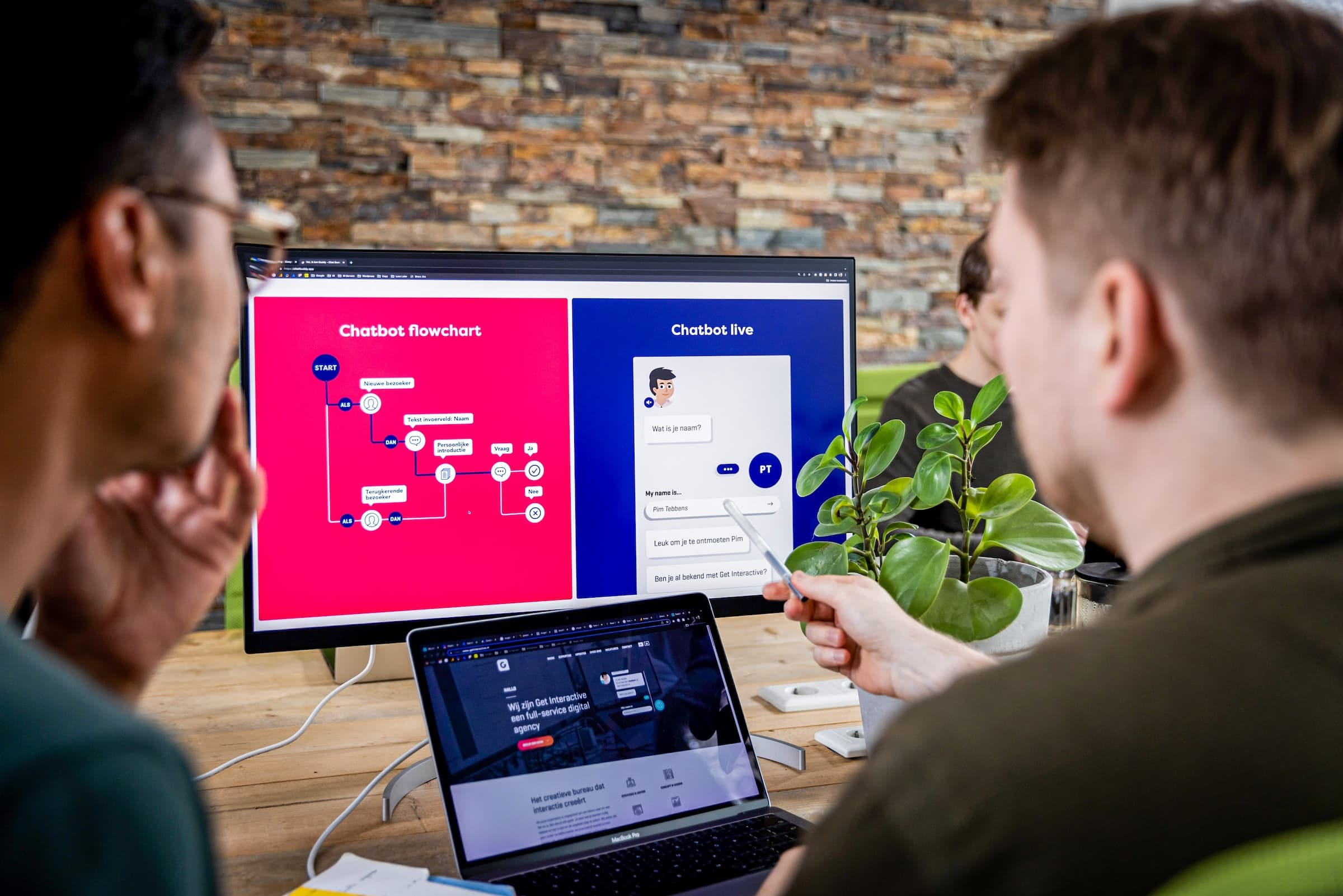
A well-designed chatbot helps your customers quickly and easily get the right information, even when no employee is available. It's even possible to guide a customer visit by having the chatbot appear in multiple parts of the site and thus guide the customer through the site.
If the customer can't figure things out with the chatbot, it can redirect them to someone from customer service or create a callback request.
A chatbot can therefore relieve customer service by solving questions that are currently handled by people. But even for more complex questions, a chatbot can be valuable; the time of a conversation with customer service can be significantly shortened by already noting someone's details and question in advance. Convenient for you, but also for the customer! After all, nothing is more frustrating than being transferred and then having to tell the whole story again.
It's also possible to use a chatbot for conducting surveys, scheduling an appointment or reservation, or giving helpful vacation tips. You see, for example, that besides the usual apps, airports now also use chatbots to share information about flight times or maximum luggage.
But besides providing information, chatbots can also increase conversions. Stores can use chatbots to point customers to products, such as a clothing store that gives customers the option to send a photo of a piece of clothing via a chatbot, which the chatbot then uses to find a similar assortment.
Chatbots give websites the ability to offer a more personal experience without having to scale up the HR department.
How Does a Chatbot Work?
But how does a chatbot actually work? Chatbots come in many different forms. Of course, the tone-of-voice and visual characteristics differ per website, but the technology behind them can also vary considerably. We'll walk you through two different technologies.
AI Chatbot: The Chatbot with Artificial Intelligence
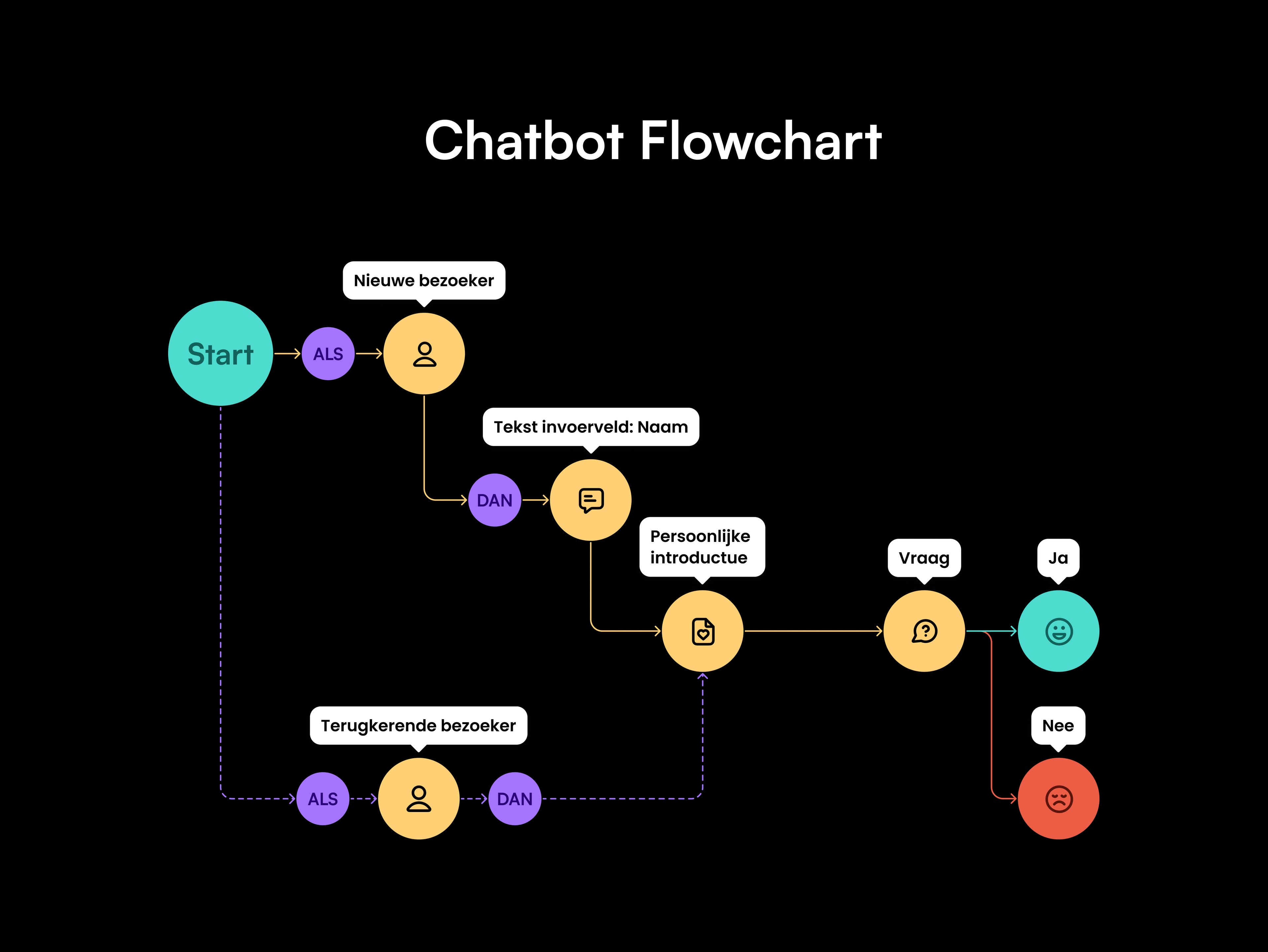
Some chatbots use Artificial Intelligence (AI) combined with tools to understand language and possibly Machine Learning to constantly improve. In this way, the chatbot tries to create a similar experience to a conversation with an employee. By responding to specific keywords such as 'order', the chatbot tries to understand what the customer's search intent is. The chatbot then looks in the database to see if an answer matches the customer's (probable) question sufficiently.
These chats often follow a freer path, since the customer constantly presents unique sentences for the chatbot to respond to. If the customer notices that the bot has misunderstood them, they can quickly switch to a different question. In this way, a bot tries to make the experience as similar as possible to a conversation with an employee.
However, there are also disadvantages to this technology. By giving the customer complete freedom in their input, you have less control over the experience and flow of the conversation. Additionally, such chatbots need to have a considerable amount of dialogues and intelligence to justify free input. For example, if you only have a script available for order status, the chatbot will have to answer "Sorry, do you perhaps mean...?" to virtually every other sentence.
Another disadvantage is overlooking language use. One customer uses the term "order", another "package", and yet another perhaps "shipment". Although the technology is making great strides, awkward conversations are sometimes unavoidable when the chatbot doesn't understand the customer. Even though the customer knows they're talking to a chatbot*, this breaks the immersion and also causes a lot of frustration, resulting in a customer dropping off.
*It is important to make clear whether a visitor is talking to a human or chatbot. A Mindshare study found that 75% of visitors want to know who (or what) they're talking to.
Scripted Chatbot: Controlled Chat
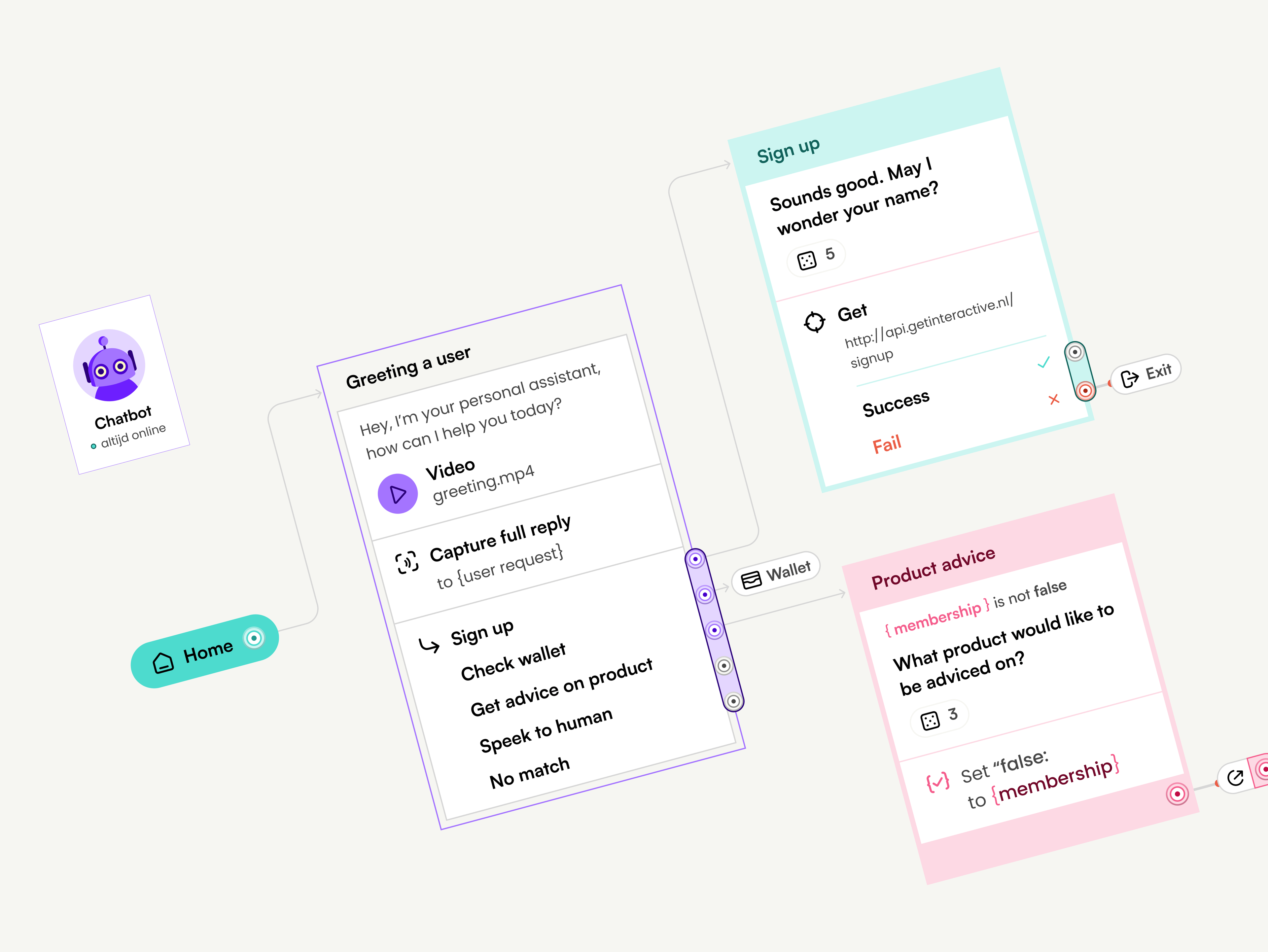
An alternative is to give the customer a fixed number of options to choose from. Through pre-presented questions and sentences, the customer navigates through the conversation. This can be supplemented with input fields for values that cannot be predetermined, such as a name or invoice number. The chatbot script remembers this data and can return it if desired ("is this your phone number correct?") or send it to an employee at the end of the conversation.
Although this form of chatbots may initially feel somewhat more limited, they're much more focused. Additionally, there are still plenty of hooks possible through the use of time blocks ("good morning, happy Tuesday", etc.) and reusing input ("Welcome back Daan"). By giving up some freedom, the customer knows for sure they'll get a logical answer to a proposed question, because your company has thought carefully about this specific flow. Or by us, of course..
Scripted Chatbots are therefore extremely suitable for, for example, ordering food or giving gift suggestions via an interactive chat script. With free chat, there would have to be a lot more back and forth chatting to achieve the desired result, and it's of course not feasible to put human employees on this during busy holiday periods.
Chat Personas and Brand Experience
We already mentioned that it's possible to use a chatbot to guide a customer through the website. But a chatbot can also be an extension of your brand experience. Chatbots can be adjusted to your own tone-of-voice and can communicate both formally and informally. It's also possible to add humor to your chatbot, but be careful with this. You don't want an angry customer trying to file a complaint to feel they're not being taken seriously because you've incorporated running jokes into the script.
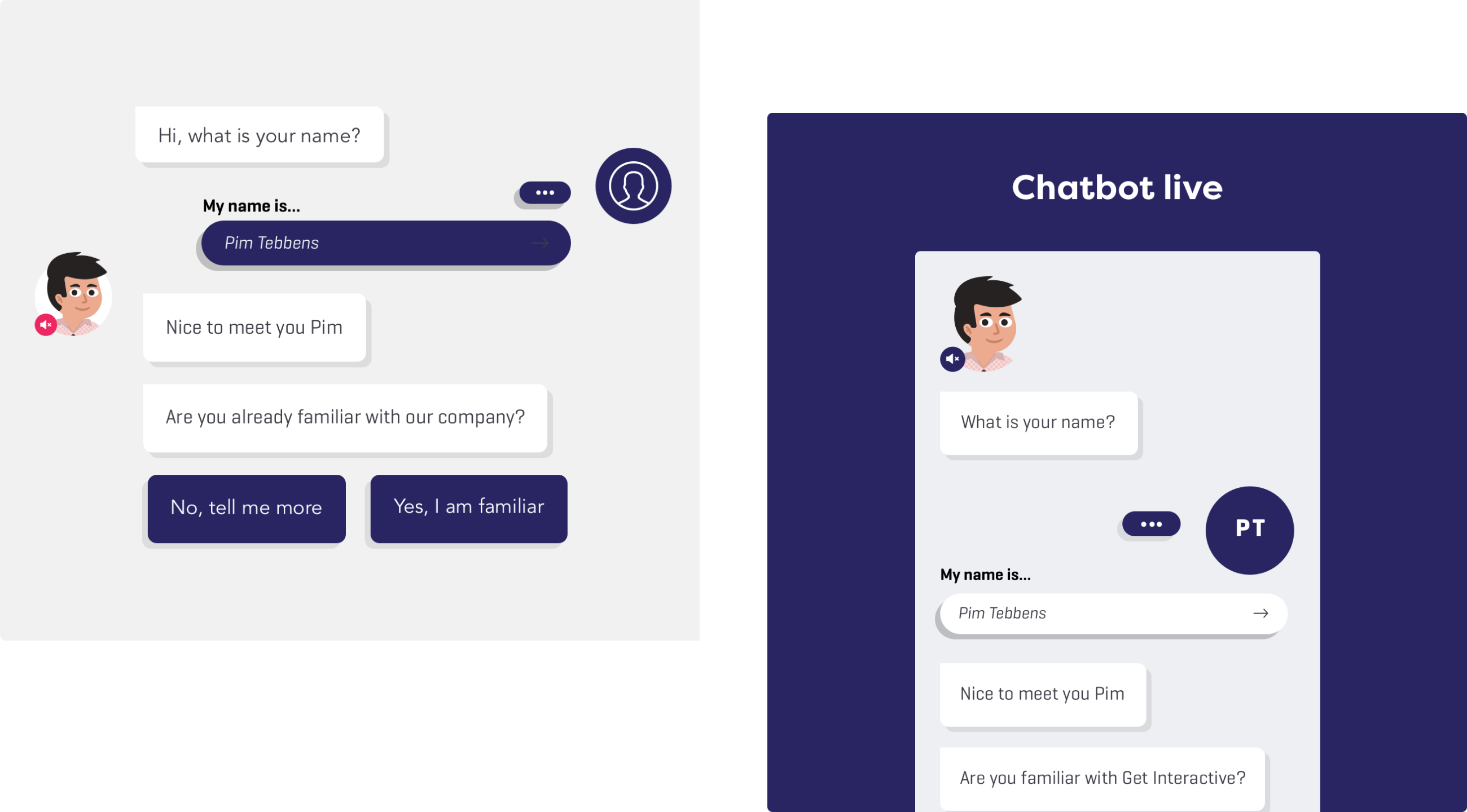
Some companies opt for a neutral chatbot without a clear persona, while for example bol.com uses the existing mascot Billie as a chat persona. A persona is an extra way to consistently communicate with your target audience. By giving the chatbot a personality, it's easier to maintain the same tone-of-voice.
If you use a persona, it's important that it communicates with the customer in a way that your employees would as well. That way, the chatbot feels like an extension of your company, rather than a standalone identity.
"73% of respondents don't want to use a company's chatbot again if they've previously had a negative experience with it"
Facts about Chatbots
We see a promising future for chatbots. But we're not the only ones! Many studies have already been conducted on the use of chatbots, and we'd like to line up a few for you:
- 38% of customers are positive about a chatbot, versus 11% negative. The remaining 51% have a neutral opinion about chatbots. This was shown in a study by LivePerson conducted among 5,000 customers in six different countries.
- 40% of respondents from a HubSpot study don't care whether a human or chatbot helps them.
- 56% of respondents (worldwide) prefer to talk to a human, according to a Business Insider study.
- 73% of respondents don't want to use a company's chatbot again if they've previously had a negative experience with it. This was shown in a DigitasLBi study within the American market.
ChatBuddy
At Get Interactive, we're very enthusiastic about the possibilities of chatbots. So enthusiastic that we proudly want to share our special website with you where we spotlight our chatbot "Buddy". So if you want to see an example of a chatbot in action, definitely take a look!
Deploy a Chatbot for Your Business?
We hope this article has inspired you to also think about adding a chatbot to your website. Are you excited about the possibilities? Then we'd love to take a look at what we can do for you.
Schedule a free call with Pim right away!
Want to know more about cases in your sector? Contact Pim, he'll be happy to tell you more and see what we can do for you.